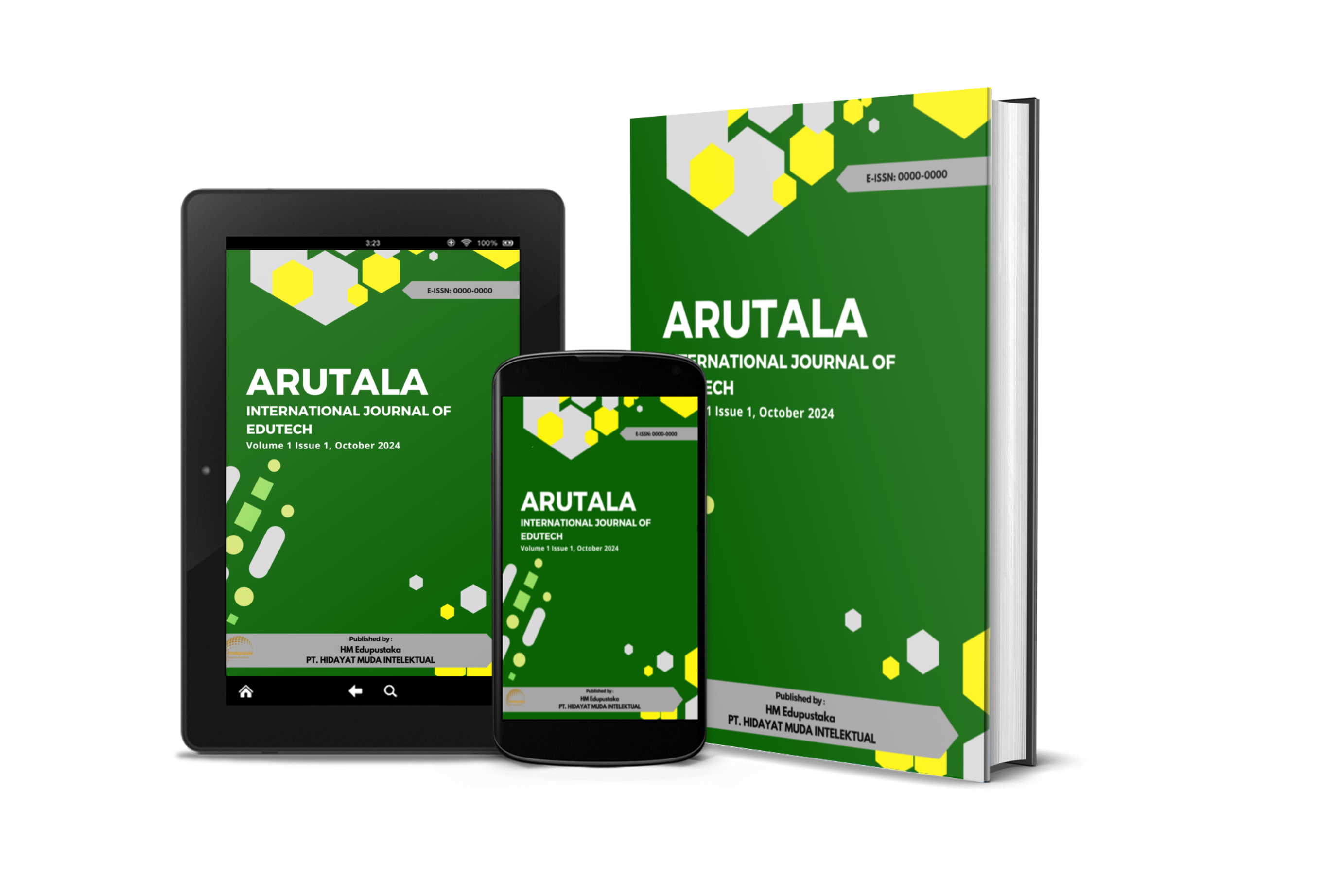
Current Issue
Articles
-
View All Issues
The Use of The Card Sort Method to Improve Learning Outcomes in Islamic Religious Education (PAI) Among Third-Grade Students at SD Negeri 001 Bangun Purba Academic Year 2021/2022
Lutfi Efendi SD Negeri 001 Bangun Purba Indonesia , Karoni Ohira Purba SD Negeri 001 Bangun Purba Indonesia , Meri Susanti SD Negeri 005 Rambah Samo IndonesiaThis study aims to improve student learning outcomes in Islamic Religious Education (PAI) among third-grade students at SD Negeri 001 Bangun Purba through the implementation of the Card Sort learning method. The background of this research is the low student achievement, which is attributed to the monotonous and less varied teaching methods previously employed. This study adopts a Classroom Action Research (CAR) approach, consisting of two cycles, each including planning, implementation, observation, and reflection. Data were collected through learning outcome tests, observations, and documentation.
The results indicate that the implementation of the Card Sort method effectively enhances student learning outcomes. In the first cycle, the percentage of students achieving mastery learning reached 50%, which increased to 90% in the second cycle. Additionally, the average student score improved from 53 in the pre-cycle phase to 72 in the first cycle and further increased to 80 in the second cycle. Student engagement also showed a significant improvement, shifting from a passive learning category in the pre-cycle phase to an active learning category in the second cycle.
Based on the findings, it can be concluded that the Card Sort method is effective in enhancing student achievement in Islamic Religious Education among third-grade students at SD Negeri 001 Bangun Purba. Therefore, it is recommended for use in teaching to foster student engagement and improve learning outcomes.
Pages: 1-10Views: 186 Downloads: 181Smart Chatbot as a Learning Media for Al-Islam and Kemuhammadiyahan Values Based on WhatsApp
Eneng Nuraeni Universitas Ahmad Dahlan Indonesia , Azaki Khairudin Universitas Ahmad Dahlan IndonesiaChatbots represent a form of interactive digital media capable of delivering real-time responses to user inputs. This article explores the development of an intelligent chatbot designed to facilitate the learning of Islamic values and the principles of Muhammadiyah through the WhatsApp platform. The primary objective of the study is to design an AI-powered chatbot that can interactively respond to inquiries and disseminate information related to Islamic teachings and the Muhammadiyah movement. Employing a prototyping research methodology, the study follows iterative phases including data collection, analysis, system design, implementation, and testing. This approach enables the chatbot to accurately interpret and respond to user queries within a predefined thematic framework, specifically focused on religious content. The integration of the chatbot into WhatsApp, a widely used social messaging application, allows for enhanced accessibility and engagement, particularly among younger users. Through this platform, the chatbot functions as an innovative educational tool aimed at fostering deeper religious understanding in a format aligned with the communication preferences of the millennial generation. The study concludes that the implementation of an AI-based chatbot in religious education presents promising opportunities for contextualized learning, interactivity, and the reinforcement of religious values in a digitally connected society. Future research is encouraged to expand its capabilities, explore user satisfaction, and assess its long-term impact on religious knowledge acquisition and behavioral change.
Pages: 11-23Views: 198 Downloads: 539Enhancing Students’ Critical Thinking through Project-Based Learning in Urban Senior High Schools of Yogyakarta
Guntur Andi Universitas Negeri Yogyakarta Indonesia , Melinda Astuti Universitas Negeri Yogyakarta Indonesia , Wahyu Purnomo Universitas Ahmad Dahlan IndonesiaThis study investigates the effectiveness of Project-Based Learning (PjBL) in enhancing critical thinking skills among senior high school students in Yogyakarta, Indonesia. In the face of growing demands for higher-order thinking in the 21st-century education landscape, traditional teacher-centered pedagogies are no longer sufficient to equip students with the necessary analytical and problem-solving skills. Employing a mixed-method approach, this research involved 64 Grade XI students from two urban public high schools. Data collection methods included pre- and post-tests using a standardized critical thinking rubric, classroom observations, and focus group discussions. The results showed a statistically significant improvement in students’ critical thinking abilities, particularly in areas of interpretation, inference, and evaluation. The findings suggest that PjBL fosters student engagement, promotes deeper learning, and provides meaningful contexts for applying critical thinking. This paper provides practical recommendations for educators seeking to integrate PjBL in the national curriculum and contribute to a more student-centered educational environment.
Pages: 24-33Views: 166 Downloads: 159
Make a Submission
menu
Meet Our Team
![]()
Keywords
![]()
Published Volumes
![]()
Web Statistic
Information
Language
![]()
This work licenced under a Creative Commons Attribution - Sharealike 4.0 International License
International Journal of EduTech (ARUTALA)
Published by PT Hidayat Muda Intelektual, Jawa Tengah, Indonesia.
